

Efficacy of botanical active ingredients from Oryza sativa, Opuntia ficus-indica and Castanea sativa in the treatment of the scalp and textured hair.
Mélanie Coirier¹, Clément Nivet², Elodie Aymard³, Hélène Muchico⁴ and Brigitte Closs⁵
¹ Editorial and Press Manager
² Innovation Management Project Leader
³ Research Department Manager
⁴ Marketing and Communication Department Manager
⁵ CEO, General Manager R&D, Quality, Communication)
SILAB
In vitro, in vivo and ex vivo studies demonstrate their natural efficacy in soothing the scalp, reducing dandruff by 26% and improving curl definition by 87%.
Introduction
Care products developed by the cosmetics industry — shampoos, conditioners, masks and detanglers — have historically aimed to make hair shinier, softer, smoother, curlier and stronger.
Hair care products alone accounted for 16% of beauty market sales in 2024, demonstrating their central role in beauty routines¹. Their success has been driven by the diversification and sophistication of the offering, as well as the close relationship between hair quality and scalp health.
Against this backdrop, hair care products are evolving by adopting approaches from skin care. This skinification trend gives consumers the opportunity to devote the same attention to their face, body and hair. In this context, SILAB has chosen to harness the skin care benefits of three of its active ingredients to offer targeted solutions for scalp and hair care, addressing scalp irritation, dandruff and the specific needs of textured hair.
A repairing concentrate for beautiful hair
The scalp is continually exposed to daily stresses caused by numerous factors, including mechanical stresses — friction during brushing and styling — thermal stresses — hairdryers — chemical stresses — dyes and overly frequent washing — and environmental stresses — dust, UV radiation and pollution —²,³.
These stresses disrupt scalp balance and trigger an inflammatory reaction, causing redness and irritation. This disruption also affects the hair, which loses shine and volume and becomes fine, dry and brittle⁴,⁵.
To restore scalp homeostasis and enhance hair beauty, SILAB has extended to the scalp the nourishing and protective skin benefits of its active ingredient derived from rice (Oryza sativa) di- and tripeptides. Several studies were conducted to determine its effects on the scalp and hair fibre, as well as its ability to enhance hair beauty.
Soothing and moisturising the scalp
The scalp-soothing effect of Oryza sativa extract was determined in vitro by analysing a key inflammatory marker, interleukin-8 (IL-8), using an ELISA assay, and in vivo by measuring scalp redness — parameter a* — with a C-Cube® dermoscope after 2 and 6 months of daily application of the active ingredient formulated at 2.5% in a lotion.
The in vitro study used keratinocytes obtained from healthy female volunteers with a mean age of 39 ± 6 years, following exposure to a sodium lauryl sulphate (SLS) solution. In vivo, the panel included 19 women aged 27 to 74 years — mean age 55 ± 12 years — who reported having fine hair weakened by frequent washing and repeated use of accessories such as hairdryers or straighteners.
In parallel, the moisturising benefit of Oryza sativa extract was also determined in vivo by assessing hydration levels with a Corneometer® in the same panel and under the conditions described above.
The results showed that treating keratinocytes challenged with an SLS solution with 1% Oryza sativa extract significantly reduced IL-8 synthesis by 41%. In the volunteers, this anti-inflammatory benefit translated into a significant reduction in scalp redness of 13.4% after 2 months of daily treatment (P < 0.05) and 62.3% after 6 months (P < 0.001) (Figure 1).
After 2 months of application, Oryza sativa extract also significantly increased scalp hydration by 40.0% (P < 0.001), and this effect continued after 6 months of use.
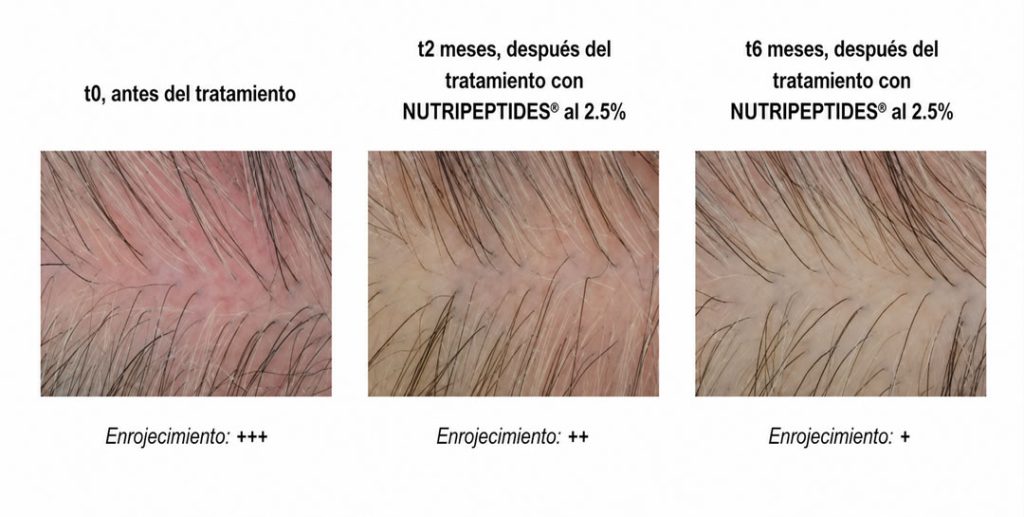
Figure 1. Visualisation of the effect of Oryza sativa extract on scalp redness.
Repairing the hair fibre
Repeated use of accessories such as hairdryers or straighteners damages the surface of hair strands: the cuticles overlap less, preventing light from reflecting off the hair surface and giving it a dull appearance.
The repairing effect of Oryza sativa extract was therefore investigated by analysing the surface roughness of hair obtained from volunteers. This parameter is directly related to hair quality, as increased roughness reflects reduced cuticle overlap.
Hair surface roughness (Sq) was calculated from 3D maps obtained using reflectance confocal microscopy in 13 healthy female volunteers aged 27 to 72 years — mean age 51 ± 12 years — from the initial panel described above. A control panel with healthy hair — neither fine nor weakened — was also included. These volunteers additionally assessed the performance of Oryza sativa extract using a subjective evaluation questionnaire.
These studies showed that the active ingredient repairs hair from 2 months onwards, a result confirmed by the volunteers themselves, 74% of whom reported softer, less damaged hair. This effect intensified after 6 months of application, reaching a significant 17.9% reduction in cuticle roughness (P < 0.001), returning it to a level comparable to that of individuals with healthy hair (Figure 2).
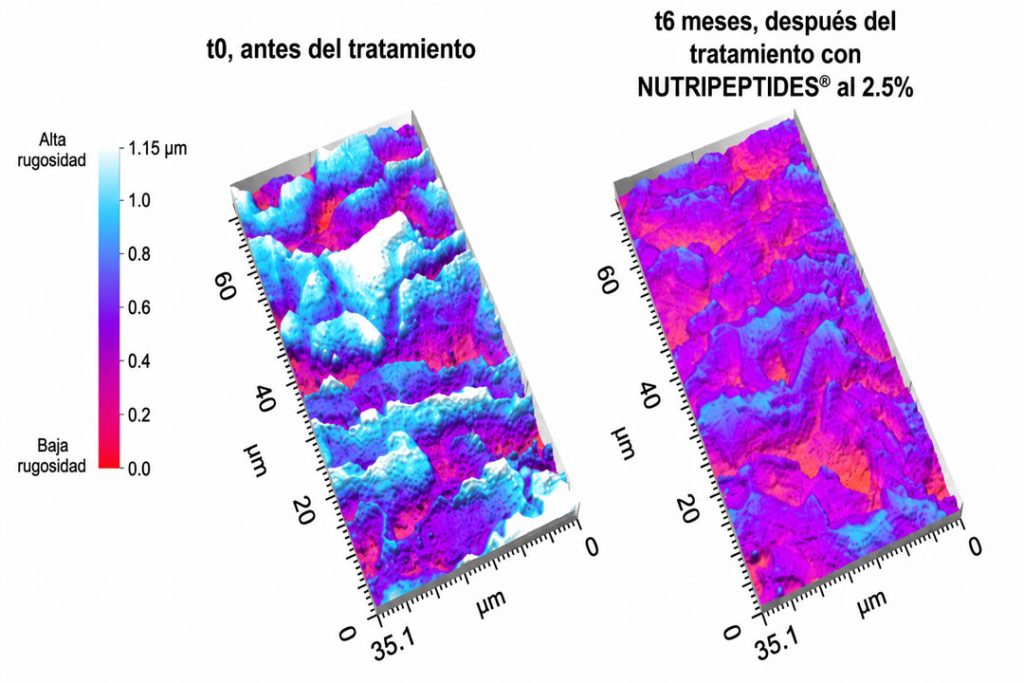
Figure 2. Visualisation of the repairing effect of Oryza sativa extract.
Enhancing hair shine, density and volume
The ability of Oryza sativa extract to enhance hair shine, density and volume was determined in the same panel and under the conditions described above. A control panel with healthy hair — neither fine nor weakened — was also included in the hair thickness study.
Hair shine was determined from digital photographs taken with polarising filters and assessed by a group of untrained evaluators. Hair density and thickness were analysed using trichoscopy, microscopy and image processing. Subjective performance assessments by the volunteers complemented these three studies.
The results showed that, after 2 months of application, Oryza sativa extract tended to increase hair shine. Untrained evaluators also observed this effect, identifying an improvement in 76% of volunteers. The effect was confirmed and intensified after 6 months, with a significant 10.0% improvement in shine (P < 0.05) and an 11.8% increase (P < 0.05) in shine as perceived by evaluators (Figure 3).
Oryza sativa extract also significantly increased hair density from 2 months onwards. This effect continued after 6 months, with an average increase of 13 hairs/cm² per volunteer, equivalent to over 7,600 hairs across the scalp. The thickness of scalp hair fibres also increased significantly by 12% (P < 0.001) after 2 months, restoring hair quality to a level comparable to healthy hair.
All these results were confirmed by the volunteers themselves: at the end of the study, all reported shinier hair, 89% reported denser hair and 74% reported increased hair fibre thickness.
NUTRIPEPTIDES®, a soothing and moisturising concentrate for the scalp, is therefore a premium natural solution for enhancing hair beauty. This patented active ingredient is recommended in all hair-repair products at a concentration of 0.5% to 2.5% and has a natural origin content of 99.4% (ISO 16128).
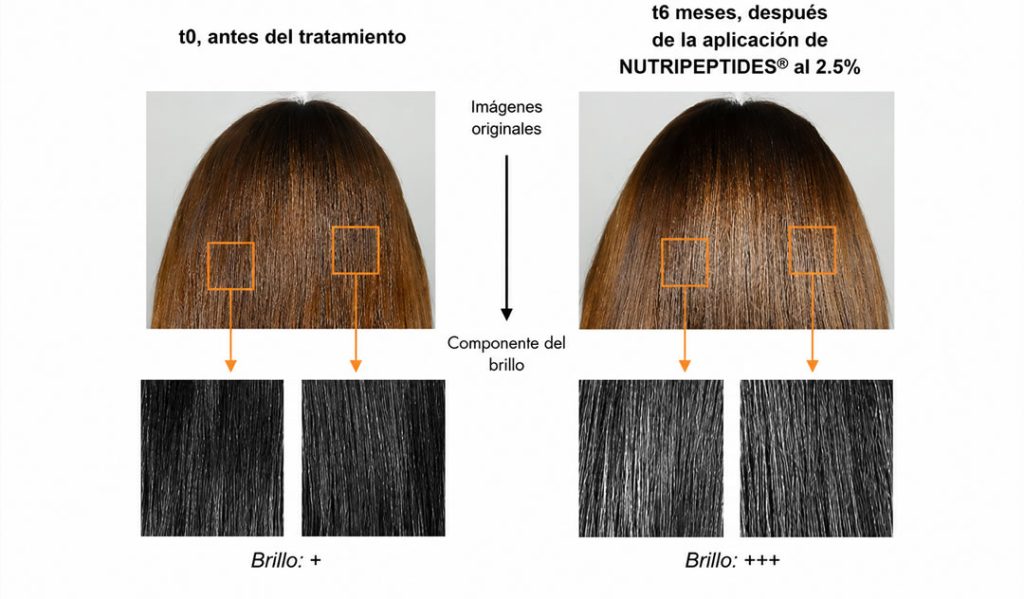
Figure 3. Visualisation of the effect of Oryza sativa extract on hair shine.
Renewing scalp care
External stresses are not the only factor causing scalp irritation. Irritation and itching can also be promoted by dehydration resulting from dandruff associated with ineffective desquamation. This key stage in epidermal physiology involves shedding dead cells, or corneocytes, from the skin surface⁶. Desquamation provides natural exfoliation, promoting effective epidermal renewal and, in turn, optimal skin hydration⁶.
As the scalp and facial skin share biological mechanisms essential to physiological balance, including desquamation, the benefits of a natural active ingredient from prickly pear (Opuntia ficus-indica) flowers were explored further. Its exfoliating and moisturising biological efficacy has been demonstrated in face and body care products. Building on these properties, this study also demonstrates its benefits in hair care products.
Acting on the endogenous desquamation process
The biological activity of Opuntia ficus-indica extract was determined by measuring the activity of kallikrein-5 (KLK-5), a key enzyme in skin desquamation, in vivo on the scalps of Caucasian subjects with dandruff.
During this study, 25 subjects — 24 women and 1 man; mean age 43 ± 14 years — applied the active ingredient formulated at 0.5% in a lotion daily for 14 days, morning or evening, over the entire roots and scalp.
The results, compared with a placebo group, showed that Opuntia ficus-indica extract significantly boosted KLK-5 activity by 74.0% after 5 days (P < 0.05). This effect persisted after 14 days of treatment, with a significant increase of 50.4% (P < 0.01).
Providing anti-dandruff, moisturising and soothing benefits
By activating the scalp's biological desquamation process, the active ingredient delivers anti-dandruff efficacy, assessed using a TrichoScan® dermoscope and clinical evaluation of digital photographs. It also demonstrates moisturising benefits measured with a Corneometer®, as well as effects on sensitivity rated by volunteers on a scoring scale. A subjective performance assessment complemented these studies.
After 5 days of daily scalp application, the results showed that, compared with the placebo formulation, Opuntia ficus-indica extract significantly reduced dandruff on the scalp surface by 26.1% (P < 0.001) (Figure 4) and significantly increased scalp hydration by 13.8% (P < 0.05).
Regarding scalp sensitivity, stinging sensations were significantly reduced by 22.3% (P < 0.05), and overall discomfort tended to decrease by 20.8% (P > 0.05) after just 5 days.
All these effects persisted or intensified after 14 days. At this stage, all volunteers reported less dandruff; 88% felt their scalp was better moisturised, less irritated and healthier (P < 0.05), 84% reported a soothed scalp and 80% experienced less itching.
Thanks to its distinctive mechanism of action, EXFOLACTIVE® is a patented active ingredient that offers a natural alternative to mechanical or chemical exfoliants for scalp care.
It is recommended in all types of scalp care products at a concentration of 0.5 to 4% and has a natural origin content of 100% (ISO 16128).
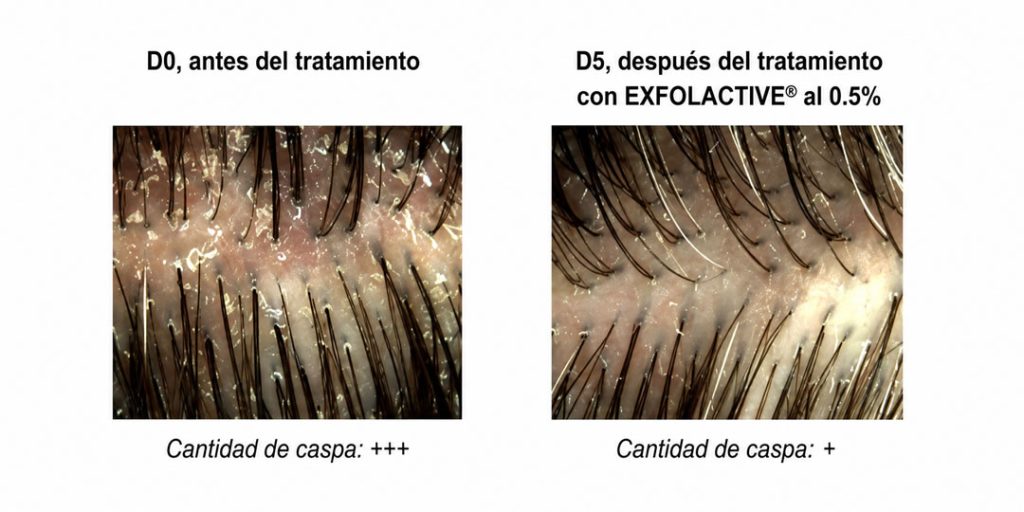
Figure 4. Ability of Opuntia ficus-indica extract to remove dandruff from the scalp surface.
High-definition care for textured hair
In hair care, consumers' desire for natural alternatives to chemical molecules extends beyond anti-dandruff products. Consumers with textured hair also seek more natural solutions without compromising efficacy⁷.
Textured hair differs from straight hair in having a naturally curly fibre. There is a wide variety of types according to the degree of curl, from gentle waves to the tight curls characteristic of highly curled hair. Structurally, it has a finer, more fragile fibre, a tendency to frizz and a lack of shine. As the curved areas of the hair are exposed to greater mechanical stress, textured hair loses definition and elasticity throughout the day⁸-¹⁰.
Given these specific characteristics, consumers with textured hair want to maintain curl definition and elasticity throughout the day. They also wish to enhance shine and limit frizz. To enhance natural curls immediately and lastingly, the benefits of a latest-generation phytopolymeric active ingredient were explored. It consists of functionalised helical biopolymers from chestnuts (Castanea sativa), obtained using exclusive, patented FHB technology®.
Enhancing textured hair
To determine the efficacy of Castanea sativa extract on textured hair, SILAB conducted a study combining instrumental measurements, a multiparametric assessment by expert hairdressers and a consumer study.
First, a preliminary ex vivo study on naturally curly hair tresses assessed the ability of the active ingredient, formulated at 0.08% and 0.16% in a lotion, to define natural curls and reduce frizz immediately after a single application and throughout the day.
The curl index parameter was used to determine natural curl definition, and the area occupied by frizzy hair was quantified in digital photographs — number of pixels. Measurements were taken before and immediately after a single application of the lotions — immediate effect — and 4 and 8 hours after application — lasting effect.
Under the study conditions, natural curl definition improved significantly by 87% (P < 0.01) immediately after a single application compared with the placebo formulation. This effect increased in a dose-dependent manner with the active ingredient at 0.16% (+141%, P < 0.01) and persisted for up to 8 hours after application (t8h: +59%, P < 0.05). Castanea sativa extract therefore significantly improves immediate curl definition and its persistence over time.
The area occupied by frizzy hair was also significantly reduced by 30% (P < 0.01) compared with the placebo formulation, and this effect remained significant for up to 4 hours (Figure 5).
These ex vivo findings were confirmed under conditions of use in an in vivo study conducted by expert hairdressers. It involved 8 healthy Caucasian female volunteers aged 24 to 55 years — mean age 42 ± 9 years — with naturally curly hair. The ability of Castanea sativa extract, formulated at 0.16% in a lotion, to improve natural curl definition and elasticity immediately and lastingly — after 4 and 8 hours — was validated through combined visual and tactile assessments on one half of the head compared with a placebo formulation.
Immediately after a single application, the results showed that Castanea sativa extract significantly improved curl definition by 11% (P < 0.01) and curl elasticity by 9% (P < 0.05) compared with the placebo formulation. These effects persisted for up to 8 hours after application (Figure 6).
The volunteers themselves also perceived these effects, as confirmed by a consumer study involving 90 Caucasian female volunteers at home under real conditions of use. They were regular users of curly-hair styling products and were divided into two groups: one testing the placebo and the other testing the active ingredient — 45 women aged 22 to 67 years; mean age 44 ± 11 years. Assessments were made 10 minutes and 8 hours after a single application using self-assessment questionnaires. For each aspect evaluated, the percentage of positive opinions based on “agree” responses is shown. At the end of the test day, subjects also rated the test product on a scale from 0 to 10.
Immediately after a single application, Castanea sativa extract was perceived as more effective overall than the placebo formulation: 66% of volunteers reported less frizz, 89% felt their curls were more elastic and 86% perceived immediately improved definition. These benefits were still present at the end of the day. Curl definition continued to be perceived as better with Castanea sativa extract, and hair showed greater shine. At the end of the consumer study, the extract was highly rated, receiving a mean score of 8.0/10 compared with 6.7/10 from participants who tested the placebo lotion, confirming its value as a novel, effective natural ingredient in hair care.
Thanks to its film-forming and adhesive properties, together with the high contraction capacity provided by FHB technology®, LIFTILIENCE® is an ideal natural solution for enhancing the beauty of textured hair.
Available as a preservative-free powder, it is recommended at a concentration of 0.08 to 0.16% and has a natural origin content of 100% (ISO 16128).
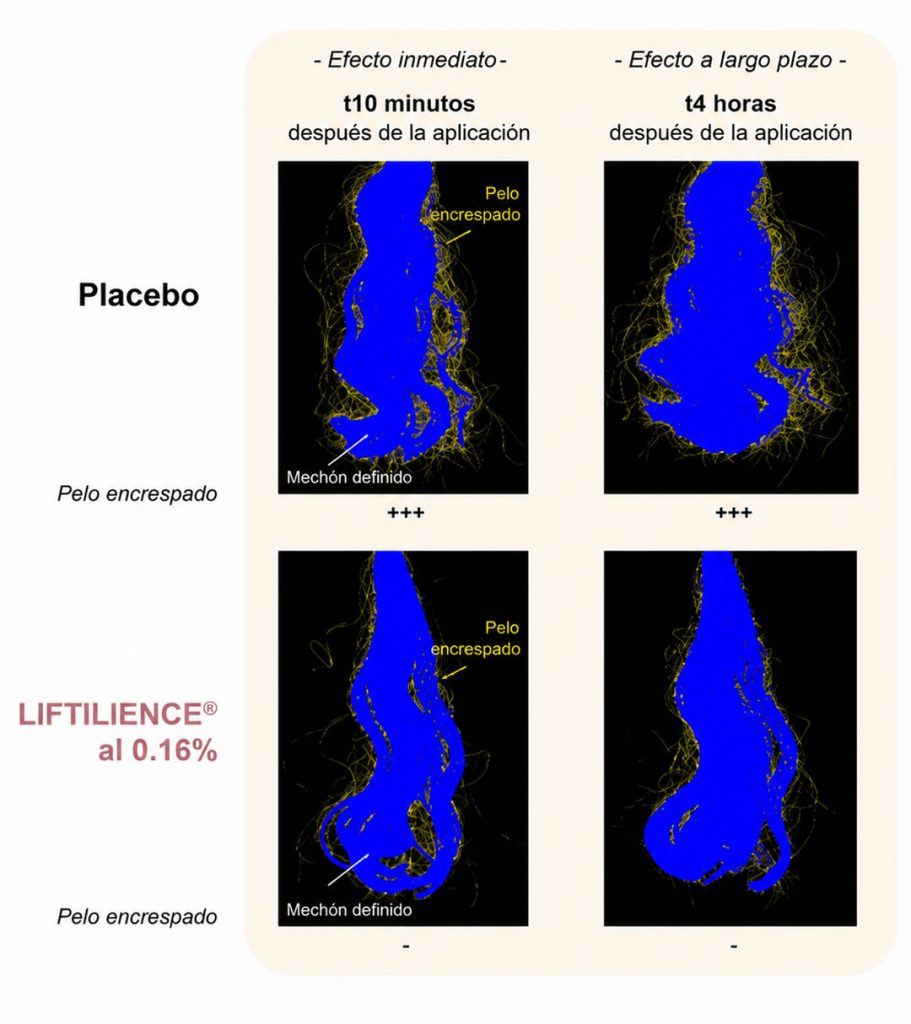
Figure 5. Visualisation of the immediate and lasting effect of Castanea sativa extract on frizz in natural curls.
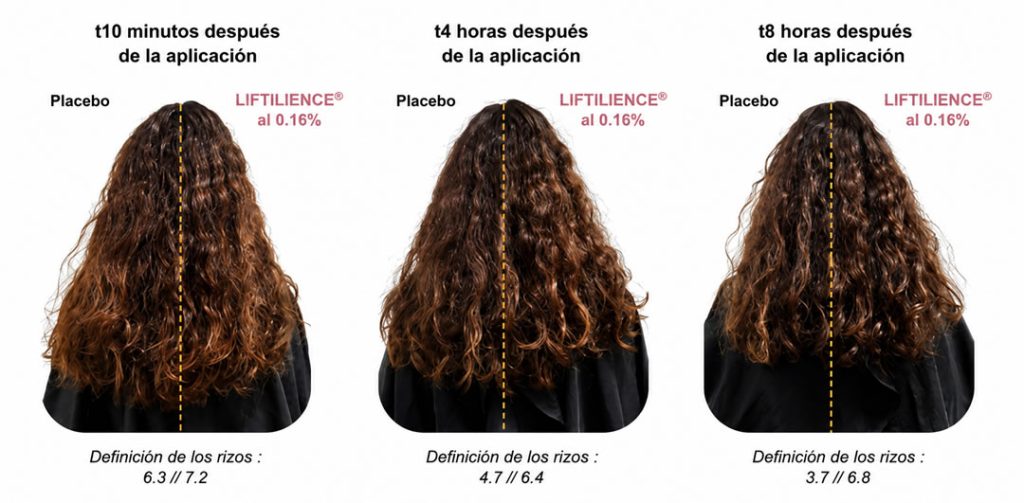
Figure 6. Visualisation of the effect of Castanea sativa extract on the definition and elasticity of natural curls.
Conclusion
The hair care market is currently experiencing a genuine boom, characterised by a more diverse and sophisticated offering. By extending the skin care benefits of its active ingredients to scalp and hair care, SILAB offers premium natural solutions enabling consumers to give their hair as much attention as their skin.
References
Euromonitor International, 2023.
Chiu T. Chin-Hsien, Huang Shu-Hung and Wang D. Hui-Min, A Review: Hair Health, Concerns of Shampoo Ingredients and Scalp Nourishing Treatments, Current Pharmaceutical Biotechnology 2015; 16(12).
Trüeb RM. Dermocosmetic aspects of hair and scalp. J Investig Dermatol Symp Proc. 2005 Dec;10(3):289-92.
Schwartz, J.R., Henry, J.P., Kerr, K.M., Mizoguchi, H. and Li, L. (2015), The role of oxidative damage in poor scalp health: ramifications to causality and associated hair growth. Int J Cosmet Sci, 37: 9-15.
Tosti A, Schwartz JR. Role of scalp health in achieving optimal hair growth and retention. Int J Cosmet Sci. 2021 Nov;43 Suppl 1:S1-S8.
Stamatas GN. Protein degradation in the stratum corneum. Int J Cosmet Sci. 2024 Aug; 46(4): 590-597. doi: 10.1111/ics.12974. PMID: 39113293.
Black hair care market size, Global Growth Insights.
Cloete E, Khumalo NP, Ngoepe MN. The what, why and how of curly hair: a review. Proc Math Phys Eng Sci. 2019 Nov. 475(2231): 20190516. doi: 10.1098/rspa.2019.0516. Epub 2019 Nov 20. PMID: 31824224; PMCID: PMC6894537.
Westgate GE, Ginger RS, Green MR. The biology and genetics of curly hair. Exp Dermatol. 2017 June 26(6): 483-490. doi: 10.1111/exd.13347. PMID: 28370528.
Oladele, D.B., Markiewicz, E.; Idowu, O.C. The Genomic Variation in Textured Hair: Implications in Developing a Holistic Hair Care Routine. Cosmetics 2024, 11, 183. https://doi.org/10.3390/cosmetics11060183.